
Ed Seykota is one of the few traders who could turn whipsaws into a song and still sound serious.
That is part of the reason he travels badly on the internet. His work gets reduced to the usual commandments: cut losses, ride winners, follow the system, do not argue with the market. The lines are not wrong. They are just too easy to repeat before the position is on.
The problem starts after the click.
A small loss does not feel like discipline while it is happening. It feels like being wrong in public, even if nobody is watching. A winning trend is not clean either. It starts to feel like property. A number on the screen becomes something the trader thinks he owns, and every pullback feels like theft.
Seykota's value is not that he made trend following sound simple. It is that he kept pointing at the part of the system that is not on the chart.
The trader wants to be right.
The market does not care.
The System Was Not There To Be Clever
Seykota became one of the names attached to computerized trend following before that phrase became normal. Jack Schwager's Market Wizards made him famous to a wider trading audience, but the story is older than the book: early computers, futures markets, mechanical systems, risk controls, and a willingness to let price do the arguing.
The attraction is obvious. A system gives the trader something to obey when the screen gets noisy. It says what to buy, what to sell, how much to risk, and when to get out. It turns trading into a set of promises made before the damage starts.
A system does not remove judgment because the trader still chooses the system, the markets, the risk, and the moment he stops following it. A system does not remove emotion because losses still hit the account and winners still invite meddling. A system does not make trading clean. It only makes the promises explicit.
That is why Seykota is still worth reading. Not because a modern trader should copy an old futures system from the 1970s. Markets, costs, data, competition, and execution have changed. The useful part is the operating discipline.
The part that still matters is the job description.
If the rule says exit, the trader exits. If the rule says hold, the trader holds. If the rule says there is no trade, the trader does not invent one because the day feels too quiet.
It sounds basic until the account is down.
Wanting To Be Right Changes The Trade
Most traders say they want to make money. Many of them also want to be right, and the second desire is more dangerous because it hides under the first one.
Wanting to be right makes the stop negotiable. It turns a failed breakout into a "longer-term thesis." It makes a small loss feel like an insult. It makes a winner feel fragile because the profit confirms the trader, and giving it back would take back the confirmation.
Trend following attacks that weakness directly.
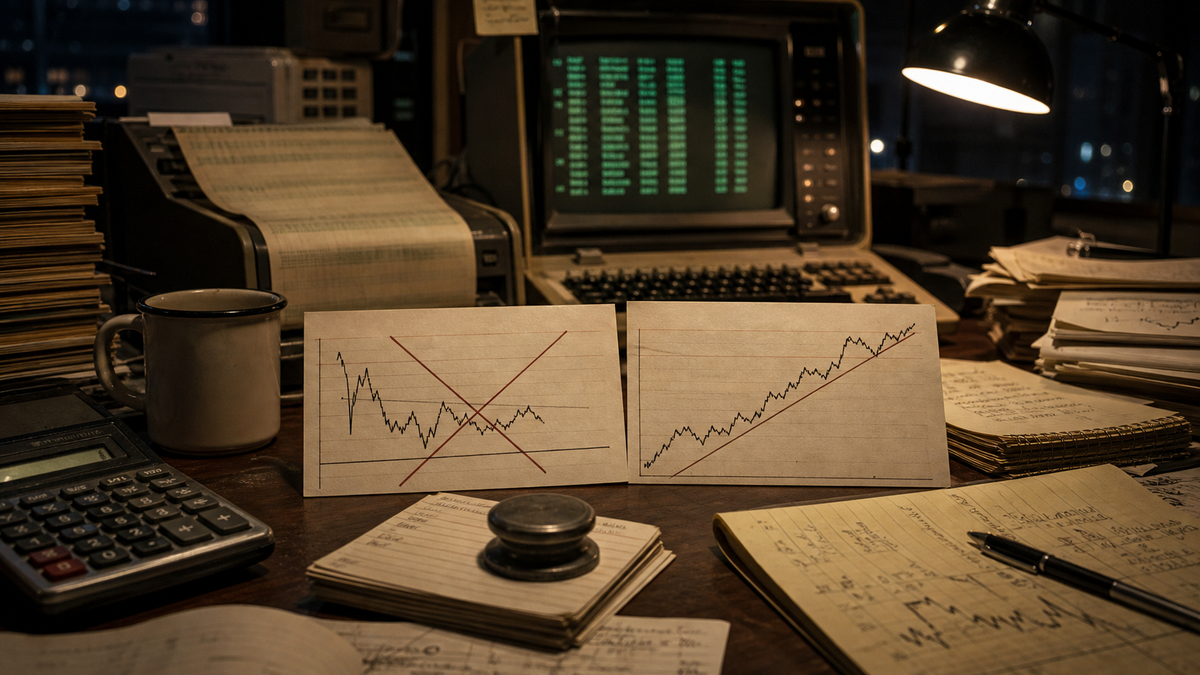
The method expects many trades to fail. It expects whipsaws. It expects ugly entries that go nowhere. It expects the trader to look foolish while waiting for the few moves large enough to pay for the rest. This is why the old Seykota material feels different from most trading education. It does not promise a cleaner emotional life. It asks the trader to stop making his emotional life the trading system.
That is the opposite of being right often. The trader has to accept that a good trade can lose money and a profitable year can contain a long stretch of unpleasant signals. He also has to accept that the biggest winner may be the one that felt too extended, too obvious, or too late.
The market does not care whether the entry made the trader feel intelligent. It cares whether the trend continues.
The Small Loss Has A Job
Seykota's public rule set is usually summarized around the same handful of ideas: ride winners, cut losses, manage risk, use stops, stick to the system. The internet version often stops there, as if the words themselves do the work.
The loss-cutting line gets repeated so often that it becomes almost useless. The better question is what the small loss is for.
It is not there to prove caution. It is there to keep the trader available for the next signal.
A small loss preserves capital, but it also preserves attention. The trader can still read the next signal without needing it to repair the last one. He can take another trade without turning it into a referendum on his competence. He can keep the system intact.
Large losses do the opposite. They start producing explanations: the market is manipulated, the stop was too close, the system is outdated, the news changed things, the next trade needs more size, the next trade needs less size.
At that point the trader is no longer executing a method. He is litigating damage.
The small loss keeps that trial from starting.
This is why "cut your losses" is not a moral slogan. It is operational plumbing. It keeps the next decision from being contaminated.
The Winner Is Harder
Cutting a loser hurts quickly. Holding a winner hurts slowly, which is why the second half of trend following is often harder than the first.
A trader can learn to take losses and still ruin the method by cutting winners the moment they become emotionally meaningful.
The early profit feels like safety. The open profit after a large move feels like property. The trader starts measuring the position from the high-water mark instead of the entry. Every pullback feels like something being stolen.
If the trend is intact, the system keeps the position open. Not because it knows the future. Not because the trader should be brave. Because the rare large move is the reason the system exists.
This is the part people underprice when they admire trend followers. The big winner looks obvious after the chart is printed. It was not obvious while the trader was watching profits swing around every day.
A trend is only easy to hold in hindsight.
Emotions Are Not A Side Issue
Seykota's later work with the Trading Tribe can sound strange to traders who only want entries and exits. It deals openly with feelings, group process, emotional habits, and the ways traders stage the same drama in different markets.
But it fits the same problem. If a trader keeps breaking rules, adding too much size, refusing stops, or cutting winners early, the issue may not be a missing indicator. The issue may be the feeling the trader is trying to avoid.
Some traders cannot stand being wrong. Some cannot stand giving back profit. Some cannot stand doing nothing. Some want action because action feels like control. Some want a large position because a normal one does not feel important enough.
The market usually finds the feeling.
This does not mean every trading desk has to become a therapy room. It means the trader should stop pretending psychology is separate from execution. A rule that cannot survive the trader's emotional habits is not really a rule. It is an aspiration.
The old Seykota lesson is colder than most psychology talk:
find the behavior that breaks the system, then make it visible.
What A Trader Can Use
There is no need to copy Seykota's markets, time frame, or old technology. The useful test is more ordinary.
What does the system require when it is losing?
What does it require when it is winning?
Where does the trader usually interfere?
If the answer is "I move stops," the problem is not the stop. If the answer is "I take profits early," the problem is not the target. If the answer is "I skip signals after losses," the problem is not the signal.
The rule is revealing the trader.
Seykota still matters because he made the machine show where the human keeps reaching in.
The goal is not to be right more often. The goal is to be wrong small, right large, and honest enough to know which one is happening.
Disclosure: Margin of Pain publishes research and commentary about traders, markets, and risk. This article is not investment advice or a recommendation to buy, sell, short, or hold any security, derivative, futures contract, currency, commodity, or asset.
Source trail
- Jack D. Schwager, Market Wizards, Ed Seykota interview.
- Ed Seykota, From Trend Following.
- Ed Seykota, Trading Tribe FAQ subject index.
- Ed Seykota, Trading Tribe Process.
- Ed Seykota, Trading Tribe resources.
- Trend Following, Ed Seykota trading rules essentials.
- TurtleTrader, Ed Seykota, his Trading Tribe and FAQ.
- AQR / arXiv version, Two Centuries of Trend Following.